Tuesday, 22 January 2019

The Art of Faliure

As a title, The Art of Failure conjures misleading images of How to Lose Friends and Alienate People. Is it really, as the cover suggests, an ‘Anti self-help guide’? The answer is perplexingly both ‘yes’ and ‘no’: The underlying aim of the book is to use philosophy and psychiatry in questioning what is regarded as success. In so doing, it claims to allow the reader to seek ‘true success,’ if this at all possible, and to flourish as a human being.
‘Know yourself’ is the central theme – the unexamined life risks a very superficial and hence fragile happiness. Socrates warns us that a busy life may be surprisingly barren. Burton builds on this idea and begins a series of symbolic assaults on the reader's ego by telling the tale of a successful 24-year-old stockbroker who jumped to his death from a trendy London rooftop restaurant in 2009. This and other narratives from philosophy, literature and psychiatry drive the book's contention that, if they aim at corporate or societal values, self-help guides may aid a superficial sense of success while a deeper flourishing goes by the wayside. The persevering reader will find that the author's symbolic challenges become tools for self-reflection.
Success is often measured against external criteria, often quantitative such as salary or possessions of social and financial value. Burton uses the cautionary tale of Tolstoy's Ivan Illich, whose social ascent comes at a cost to his intellectual development and family life. In a satirical coup de gras, he fatally injures himself while making improvements to his house. Burton loosely uses ‘Bourgeois’ and ‘Middle-class’ as soft targets throughout the book to declaim our reliance on others to tell us when we should be happy or consider ourselves successful. He quotes Renton's powerfully snide speech from the novel and film Trainspotting, ‘Choose a job. Choose a career. Choose a family. Choose a f***ing big television. Choose washing machines, cars, compact disc players and electric tin openers.’
Burton uses the 19th-century philosopher Soren Kierkegard's three lives to illustrate levels of self-awareness: the aesthetic, ethical and religious lives. The person who leads the aesthetic life aims solely at the satisfaction of his desires. As the aesthete adapts his behaviour to his environment, he does not have a consistent, coherent self. Controversially perhaps, Burton uses the example of a heroin addict as someone driven by desire. When heroin is freely available the addict can generally abide by societal norms, but when the addiction can no longer be afforded he will be driven to crime as a source of funding. By contrast, the person who lives the ethical life lives according to universal moral principles regardless of the circumstances. The highest type of life, which Kierkegard calls the religious life, has characteristics of both the aesthetic and ethical. Like the aesthetic life, the religious life prioritizes individual circumstances and leaves open the possibility of immoral behavior. However, like the ethical life, it acknowledges the authority of universal, determinate moral principles, as embodied in social norms and conventions. The religious life opens the door to moral indeterminacy. Anxiety is the dizziness of freedom. Though Kierkegard's lives are used to illustrate the superficial disadvantage of the unexamined life (in a chapter entitled ‘Fear’), they illustrate a problem with taking some of Burton's assertions at face value. The Ivan Illich parable and the criticism of middle class are idealistic, and more criticism of specific instances of unthinking materialism than of a historical movement which allowed the possibility of social mobility, and of transcending the aesthetic. Burton paradoxically acknowledges the idea that ‘values’ which constrain freedom are not timeless and universal but the product of a given community, in a given society at a given time.
Throughout the book, there is certain ambivalence. On the one hand he describes the Soviet use of psychiatry to suppress dissenting cultural and religious views. On the other he expresses, with some nostalgia, the notion that, ‘it is too late to go back to living as our ancestors once did, and subsume our egos into the collective ego of some group’. Though he chooses not to follow the point – the book contains several starting points for discussion which are not followed – he does both describe the necessity for individualism and the pain of social alienation incumbent in accounts of mental illness.
‘The problem with the modern man,’ writes Burton, ‘… is forever stuck somewhere in-between [perspectives] … As a result, he has neither the joy of the perfect moment, nor the perspective of a human life-time, nor the immortality of the eternal.’ The chapters are progressive and thematic, they incrementally challenge the reader's ego: For example ‘Mania’ describes the possible existential dangers of the busy life, ‘Fear’ for the most part tackles the anxious discomfort of self-awareness, and ‘Death’ puts mortality and the biological survival imperative at the heart of all neurosis.
The Art of Failure is ‘pop-philosophy’ with a large side-helping of ‘pop psychiatry.’ It is aimed at the ‘hoi poloi’ or the non-philosophizing majority in 21st-century culture. It is easy to follow but many of its points are basic and some are open to challenge. One wonders if the throw-away comment that the best teachers are unwilling teachers is deliberately contentious or an indictment of pedagogical power – we never find out. A danger of eschewing all external values may be that The Art of Failure becomes a manifesto for a sublime egocentric selfishness! The Art of Failure with illustrate and entertain, will enlighten and infuriate, but has left this reviewer with a slightly deeper knowledge of himself.

Tuesday, 15 January 2019

Love Right

Imperfection is beauty, madness is genius and it’s better to be absolutely ridiculous than absolutely boring. ~ मौहतरमा  Monroe

Monday, 28 April 2014

Cosmic Mirage

A team of researchers led by Robert Quimby at the Kavli Institute for the Physics and Mathematics of the Universe (Kavli IPMU) has announced the discovery of a galaxy that magnified a background, Type Ia supernova thirtyfold through gravitational lensing. This is the first example of strong gravitational lensing of a supernova confirms the team's previous explanation for the unusual properties of this supernova.
The team has further shown how such discoveries of supernovae of Type Ia (SNIa) can be made far more common than previously thought possible. SNIa seen through gravitational lenses can be used to make a direct measurement of the universe's expansion rate (the Hubble parameter), so this discovery may have a significant impact on how cosmic expansion is studied in the future.
Supernovae of Type Ia (SNIa) are tremendously useful to understand the mysterious components of the Universe such as dark energy and dark matter. SNIa have strikingly similar peak luminosities, regardless of where they happen in the Universe. This property allows astronomers to use SNIa as standard candles to measure cosmological distance independent of the Universe's expansion. Distance measurement with SNIa was key to the discovery of accelerating expansion of the Universe (2011 Nobel Prize in Physics).
In 2010, a supernova named PS1-10afx was found that demonstrated the same color and light curve (the change in brightness over time) as a Type Ia supernova, but its peak brightness was 30 times greater than expected. This discovery was made using the Panoramic Survey Telescope & Rapid Response System 1 (Pan-STARRS1, a telescope located in Hawai'i that can image the entire visible sky several times each month). This anomaly led some to conclude that it was a completely new type of superluminous supernova. "PS1-10afx looked a lot like a Type Ia supernova, " says Quimby, "but it was just too bright."
The physics of Type Ia supernovae have been studied in detail over the past three decades, and there is no known way to produce a Type Ia supernova with normal colors and a normal light curve but a substantially higher luminosity.
"Generally, the rare supernovae that have been found to shine brighter than Type Ia usually have higher temperatures (bluer colors) and larger physical sizes (and thus slower light curves)," Quimby continues, "New physics would thus be required to explain PS1-10afx as an intrinsically luminous supernova."
"We found a second explanation," says Marcus Werner, Mathematical Physicist at the Kavli IPMU, "and it required only well demonstrated physics: gravitational lensing. If there was a massive galaxy in front of PS1-10afx, it could warp space-time to form magnified images of the supernova."
"Although the available observations were consistent with the hypothesis of our team, we needed to answer the question: Where was the lens galaxy?" says Anupreeta More, Astronomer at the Kavli IPMU, "The existing data clearly showed the presence of the supernova's host galaxy, but there was no evidence for the necessary foreground galaxy. We then tried to find the evidence."
In September 2013, Quimby's team set out to find the hidden lens. Using the Low-Resolution Imaging Spectrograph on the 10 meter Keck-I telescope located in Hawai'i, they spent 7 hours collecting light at the location of PS1-10afx, which had by then faded away itself.
"After carefully extracting the signal from the data, we had confirmation." More continues, "Buried in the glare of the relatively bright host galaxy, we found a second, foreground galaxy. This second galaxy was faint enough to have previously gone unnoticed. But our analysis showed that it was still the right size to explain the gravitational lensing of PS1-10afx."
"We had existing predictions of what a gravitationally lensed Type Ia supernova would look like," says Masamune Oguri from the Department of Physics at the University of Tokyo, "But the small size of this lens galaxy and the large magnification it produced was not exactly what we were expecting for the first discovery." Oguri continues, "However, this system may very well prove typical of discoveries to come. Because more distant supernovae are more likely to be gravitationally lensed, lensed supernovae are typically highly magnified and located in the distant universe."
A consequence of this is that most of the gravitationally lensed Type Ia supernovae that will be found with future surveys using instruments such as the coming Large Synoptic Survey Telescope can be identified by their colors; the higher redshift, gravitationally lensed supernovae being redder than the more nearby, un-lensed objects. "Our new approach allows us to find unresolved strong lensing events produced by such low-mass galaxies. Thus, the expected number of gravitationally lensed Type Ia supernovae to be found in future surveys increases by an order of magnitude," says Oguri.
"In the future, when a target is identified as a possible lensed Type Ia supernova," says Quimby, "high-resolution follow-up observations can be taken to resolve the individual image components." Each image comes from the same source but travels a different path length on its way to the observer, so there is an arrival time difference between these multiple supernova images. If this "time delay" can be measured, a direct test of cosmic expansion is possible, faster expansion leads to shorter time delays. By timing the delays precisely and comparing these to the delay expected from the geometry of the lens, expansion history of the Universe can be directly inferred. Quimby continues, "The discovery and selection method we have crafted may thus soon improve our understanding of our expanding universe."

Source : University of T


okyo

Friday, 25 April 2014

Rosenberg's Cold War

As the Cold War congealed in the late 1940’s and early 1950’s, the United States of America found itself ensnared in an atmosphere of fearful suspicion and paranoia. The Red Scare, which peaked during the roughly seven years between 1947 and 1954, came to dictate the mindset of Americans during the early stages of Cold War. Marked by such unsettling events as the Alger Hiss Trial of 1948, the passage of the McCarren Internal Security Act and the rise of red-seeing Senator Joseph McCarthy, the Red Scare raged across the country, fueled by fear of the harmful doctrines of the rapidly advancing Soviet Union. It was on the pinnacle of this paranoia and distrust that the trial and execution of Julius and Ethel Rosenberg came to dominate the American headlines.
Following the first successful nuclear tests by the Soviets in 1949, America quickly began to fear the scientific strides of their eastern-hemisphere rival, and its citizens began to suspiciously eye those around them, believing that Soviet spies must have been responsible for passing the nuclear technology from the United States to Russia. On July 17, 1950, Julius Rosenberg, an electrical engineer and employee for the U.S. Army Signal Corps, was arrested for allegedly passing atomic secrets to Russia. One month later, on August 11, Julius’ wife, Ethel, was also arrested, charged with assisting her husband with his illicit activities. The Rosenbergs, former members of the American Communist Party, were implicated by Ethel’s brother-in-law, David Greenglass and a Philadelphia chemist, Harry Gold, who, after admitting to their own espionage activities, served as the primary witnesses in the trial. Despite the existence of only flimsy, circumstantial evidence (which included conflicting stories by Gold and Greenglass, a series of vague sketches that Greenglass presented as being identical to the secrets passed by Julius to the Soviets and government secrecy with its own evidence), Julius and Ethel Rosenberg were sentenced to death under the Espionage Act of 1917. Even after their conviction, the couple continued to assert their innocence from inside Sing-Sing Prison in New York, attempting to appeal to the Supreme Court seven times although failing to receive a hearing each time.
 Amid a mounting worldwide campaign for clemency, the Rosenbergs were executed by the electric chair after two years of prison on June 19, 1953. Prior to the execution, both President Truman and President Eisenhower had disregarded cynical public opinion (which overwhelmingly believed that the evidence used to convict the couple was weak and ethereal at best) by refusing to pardon Julius and Ethel. The death of such a sympathetic pair of individuals — many felt an affinity for the pitiable couple and their two young sons — spurred protest through the next decades and marked the beginning of the end of the Red Scare. Although such events as the McCarthy hearings of 1951-1954 would continue for some time, the Red Scare began to lose steam as Americans were jolted with sensibility by the electric shock that killed the Rosenbergs.
However, with the end of the Cold War and the disclosure of Soviet intelligence in the 1990’s, new, stronger information confirming the espionage activities of Julius Rosenberg was released (although the role of his wife still remains dubious). It is now clear that Julius, an avid communist, had for some time been disclosing U.S. military secrets to the U.S.S.R. from his post in the U.S. Army Signal Corps. David Greenglass, who himself had worked on the Manhattan Project, disclosed nuclear secrets to Julius, who in turn passed the information to Harry Gold — a courier for the espionage ring — who in turn passed it to Anatoly Yakovlev — the Soviet vice-consul in New York City. Soon after Gold was arrested in May 1950 for giving U.S. and British atomic secrets to Russia, Greenglass and Rosenberg were detained on the basis of their association with Gold. By cooperating with federal agents in proving the guilt of Julius and Ethel Rosenberg, Greenglass and Gold were given lighter sentences (Greenglass received 15 years in prison in a separate trial and Gold received 30 years in prison). The courts also made clear that if either of the Rosenbergs would admit to their espionage, they too could avoid execution, but the couple, loyal to their cause and riding a wave of public support, continued to adamantly state their innocence until their death on the day of June 19, 1953.

Russell Peters did his Job

Saturday, 19 April 2014

Takes me back to teenhood...That feel(Pink Floyd)


"How I wish, how I wish you were here
We're just two lost souls....."
“Wish You Were Here” is the title track on Pink Floyd’s 1975 album Wish You Were Here. The song’s lyrics encompass writer Roger Waters' feelings of alienation from other people. Like most of the album, it refers to former Pink Floyd member Syd Barrett and his breakdown

Tuesday, 25 March 2014

Philadelphia Experiment was based on the Unified Theory..duh !

Almost everyone has heard of the Philadelphia Experiment, although the number of people who actually have any idea as to what it was all about are nowhere near as numerous. The Experiment seems to fall into the same realm as the Kennedy Assassination; clouded by rumor and supposition, the exact truth of either incident will probably never be known. Both events are also plagued by a mass of incorrect or inaccurate information. Conspiracy buffs are more than happy to create wild, intricate plots involving virtually anyone and everyone on the planet (and in the case of the Philadelphia Experiment, off the planet).

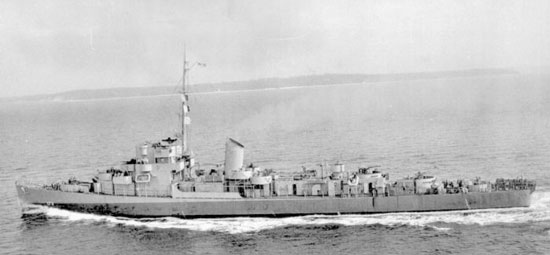
On August 12, 1943 (or October 28, 1943 - accounts differ) the US Navy conducted a test of some sort on the USS Eldridge (DE [Destroyer Escort] 173) at the Philadelphia Navy Yard. The exact nature of this test is open to speculation. Possible tests include experiments in magnetic invisibility, radar invisibility, optical invisibility or degaussing (rendering the ship immune to magnetic mines). The test (or tests) were conducted, only to produce undesirable results. Afterwards, the project (supposedly called 'Project Rainbow') was canceled.

U.S.S. Eldridge at sea in 1944
As one can easily see, the actual facts are scanty. The Navy denies that any sort of experiment ever took place, and the ship's logs show that the USS Eldridge was nowhere near Philadelphia at the time the test was supposed to take place. Of course, logs can be faked, and the government and military has lied before about certain events in the interests of secrecy and national security (witness the Manhattan Project). On the other hand, research has shown no evidence of a "Project Rainbow", although there was a code name "Rainbow"; it was used to designate the Allied plans to combat the Axis in World War II and had nothing to do with any form of experimental technology. As a final note, it should be pointed out that even some basic research (the World Wide Web is loaded with relevant sites) will show that the entire 'experiment' may in fact be a massive hoax, a modern urban legend that has grown to fantastic proportions over time. Such sensationalistic writing has been successful in creating such similar epic myths before, with the "Bermuda Triangle" a prime example.
 True Story
According to certain accounts, the actual results of the experiment involve occurrences far stranger than anyone could possibly imagine. The tests being conducted were an attempt to render a ship invisible to enemy radar. This was to be accomplished by wrapping an electromagnetic 'bottle' around the ship in question, absorbing or deflecting radar waves. The bottle was created by two (or four - accounts differ) massive Tesla coils which acted as electromagnetic generators; one was mounted forward and one was mounted aft. Other accounts state that a series of magnetic generators, called degaussers, were used. When activated, the electromagnetic field would extend out from the ship and divert radar waves around the ship, making the Eldridge invisible to radar receivers.
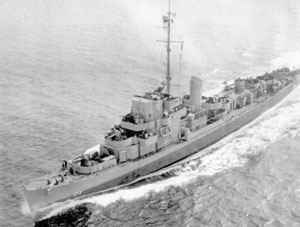
U.S.S. Eldridge at sea April 25th, 1944
When the actual test was put into motion, a number of unexpected and bizarre side effects occurred. As the electromagnetic field increased in strength, it began to extend as far as 100 yards out from the ship in all directions, forming a large sphere. Within this field, the ship became fuzzy and indistinct, and a greenish haze formed around the vessel, obscuring it from view. Eventually, the only visible object was the outline of the hull of the Eldridge where it entered the water. Then, to the amazement of onlookers, the entire ship vanished from view.
It was at this point (the vanishing of the Eldridge) that the true power of the electromagnetic field that had been created was revealed. The Eldridge had not only vanished from the view of observers in Philadelphia, it had vanished from Philadelphia all together! The ship had been instantly transported several hundred miles - from Philadelphia to Norfolk, Virginia. After a few minutes, the ship once again vanished, to return to Philadelphia.
To the Navy, the test had succeeded beyond their wildest dreams. Not only had they rendered a ship invisible to radar, they had made it optically invisible as well, not to mention causing the vessel to teleport hundreds of miles in a matter of minutes. For the crew, however, the trip had been a nightmare.
The test had managed to render the entire ship 'out of phase' with the surrounding universe, which is why it was able to travel from Philadelphia to Norfolk instantly. This phasing effect had drastic effects on the crew members. During the experiment, crew members found they could walk through solid objects, and when the field was shut off, men were found embedded in the bulkheads, decks and railings of the ship. The results were gruesome enough that some men went mad. Afterwards, several crew members simply vanished. A few disappeared into thin air; one, eating dinner with his family, rose, walked through a wall and was never seen again. Some men entered into what was called the 'Freeze'. This is where a man faded from view; unable to move, speak or otherwise affect his surroundings. Initially, the Freeze effect lasted only a few minutes to a few hours. Interestingly enough, invisible crewmen were still visible to other sailors who had survived the original experiment. After a while, the Freeze effect lasted for days or months, and became known as the 'Deep Freeze' (other terms include 'Caught in the Flow', 'Caught in the Push', 'Get Stuck', 'Go Blank', 'Hell Incorporated' or 'Stuck in Molasses'). The Deep Freeze could drive a man insane in very short order, and was only able to be counteracted if other crewmen performed a 'Laying on of Hands' technique to give the victim strength and allow him to recover from his affliction. Unfortunately, two men burst into flames while Laying on of Hands, burning for 18 days despite all attempts to quench the fire.
Seeing the horrible after effects of the experiment, the Navy discontinued all further research into radar and optical invisibility. The surviving crewmen were discharged as mentally unfit for duty and many were placed in insane asylums. However, science was not quite done conducting research on electromagnetic fields or radar and its affects on the human mind. Project Rainbow may have been disbanded, but the Phoenix Project was just getting started.